
2026. 3. 26. 13:44ㆍARCHITECTURE/COMMERCIAL & OFFICES
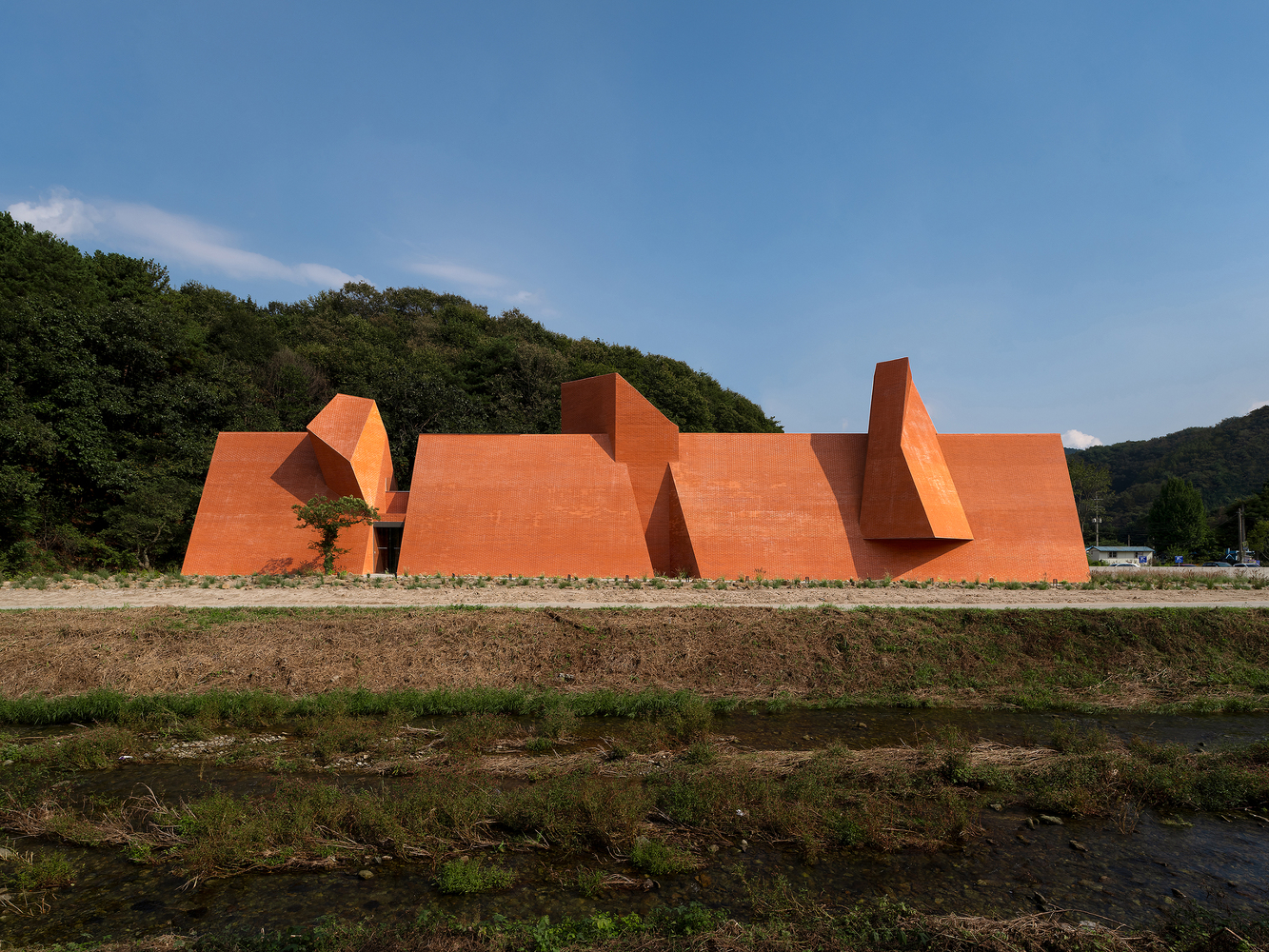
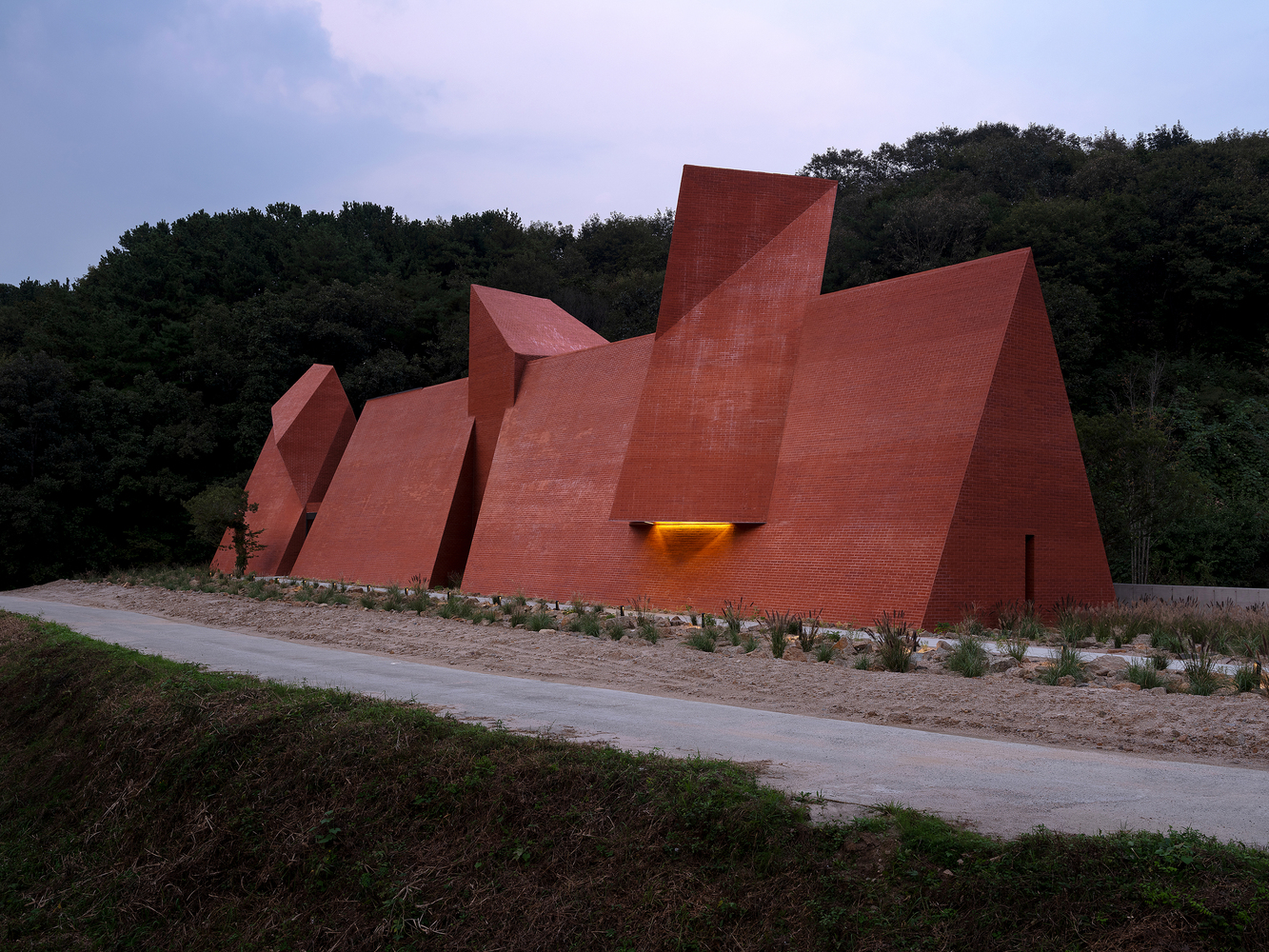
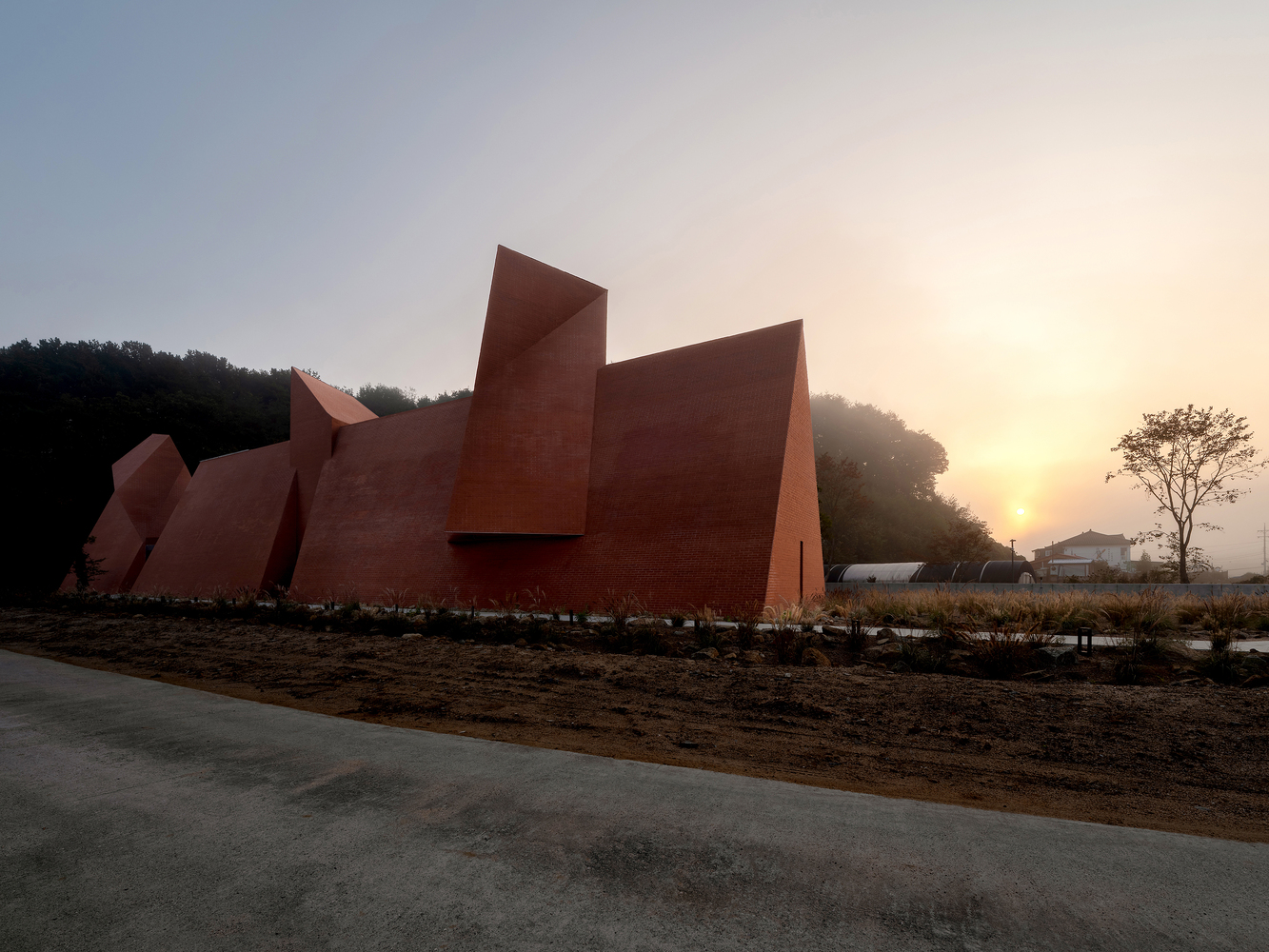
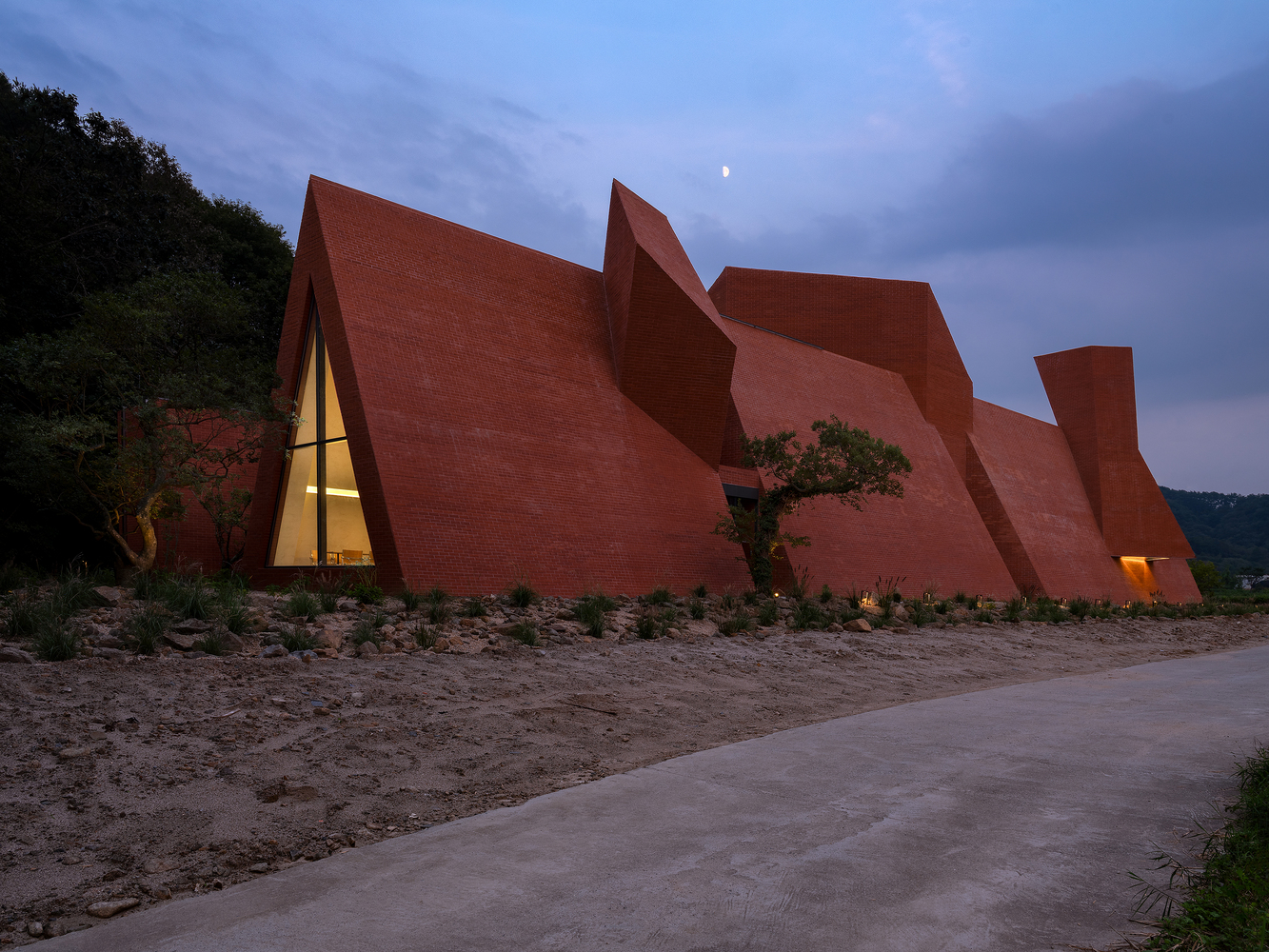
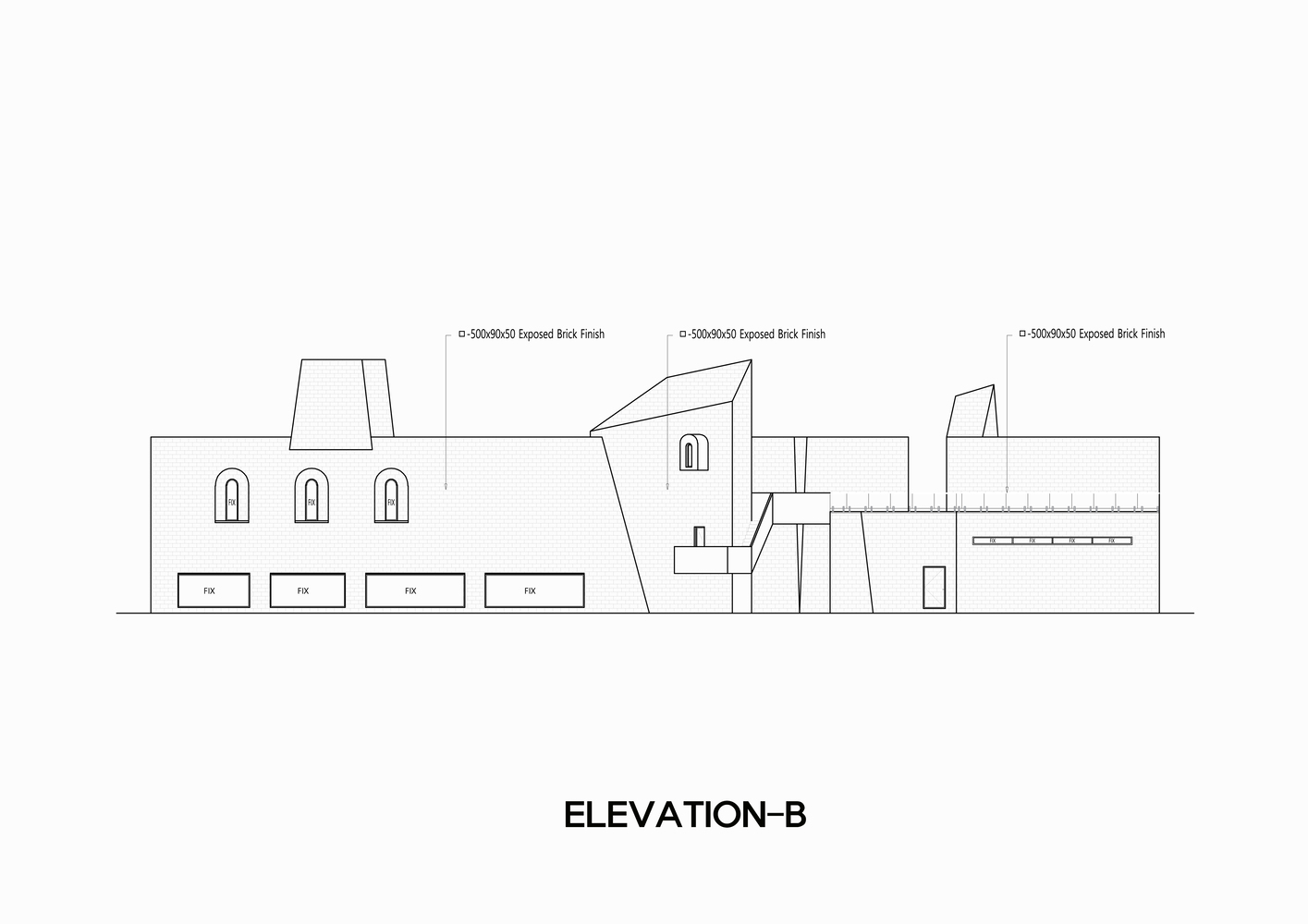
대한민국 강원도 홍천의 숲으로 둘러싸인 자연 환경 속에 위치한다. 건물은 하나의 독립된 객체로 드러나기보다, 풍경과 시간의 흐름 속에 스며든 조형적 존재로 계획되었다. 건축은 단일한 정면성을 의도적으로 배제하고, 관람자의 위치와 이동에 따라 서로 다른 형태로 인식되도록 구성되었다.
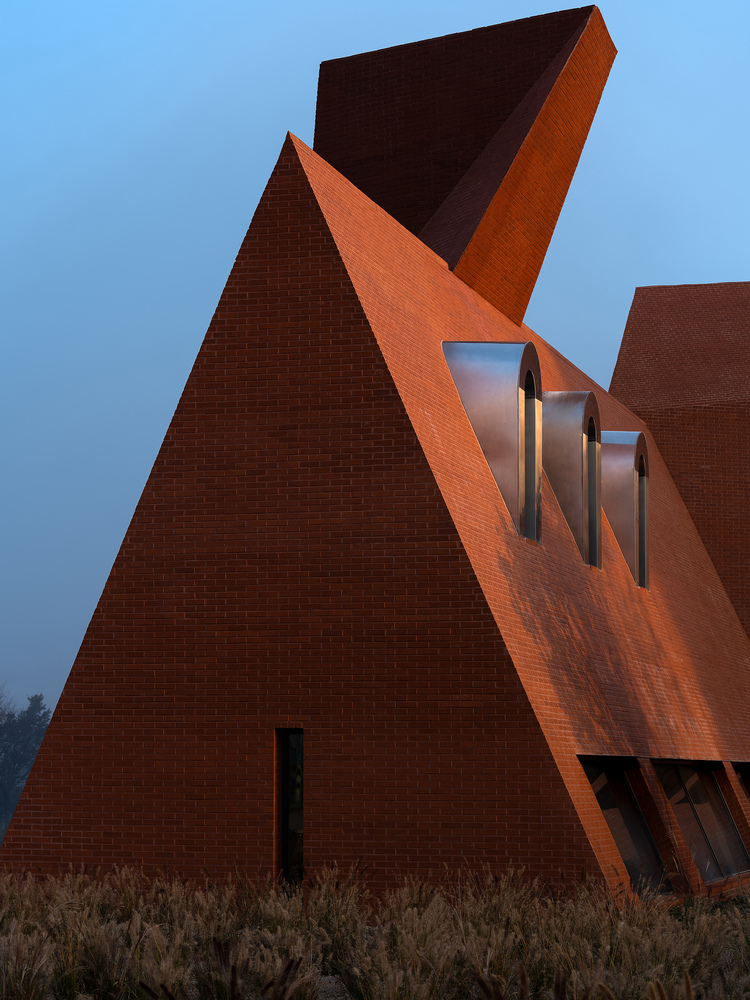
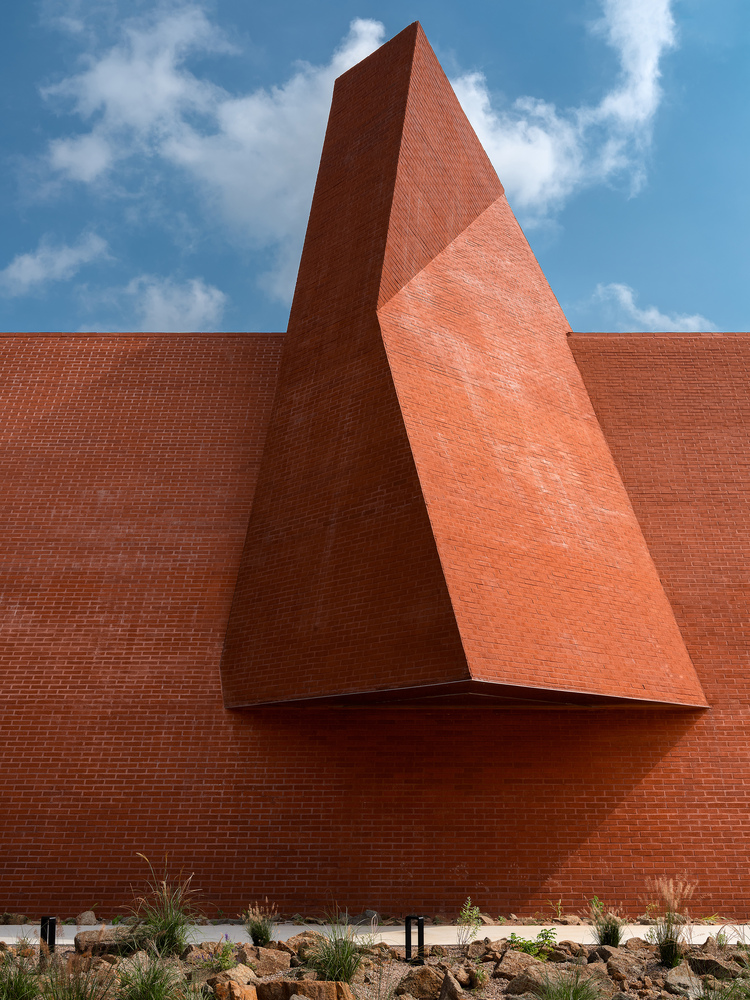
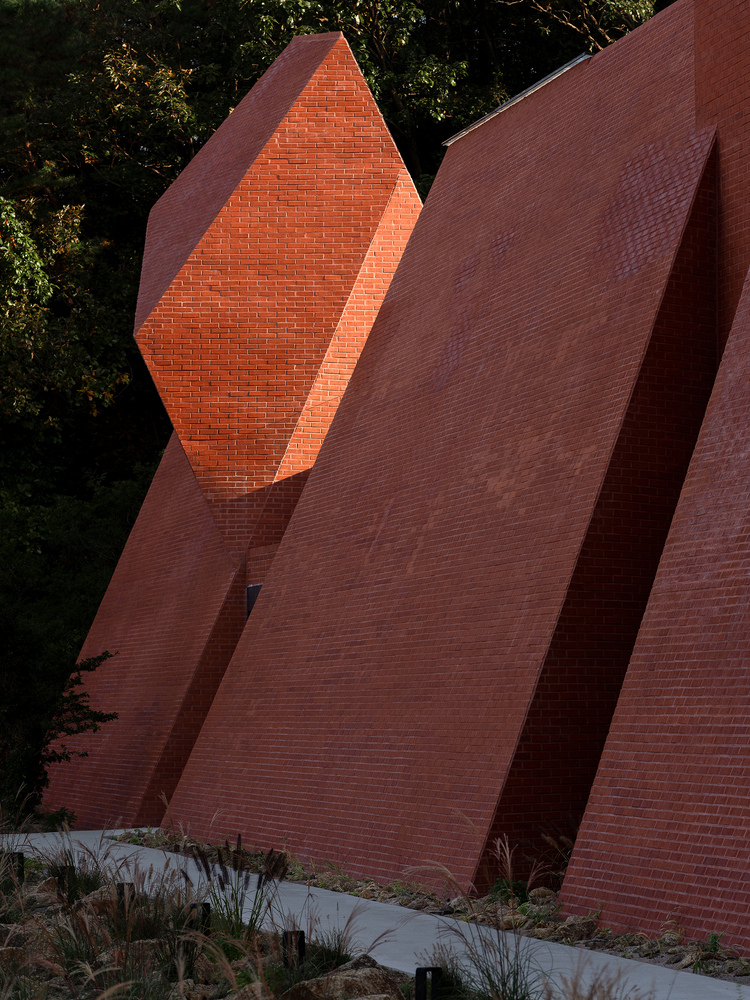
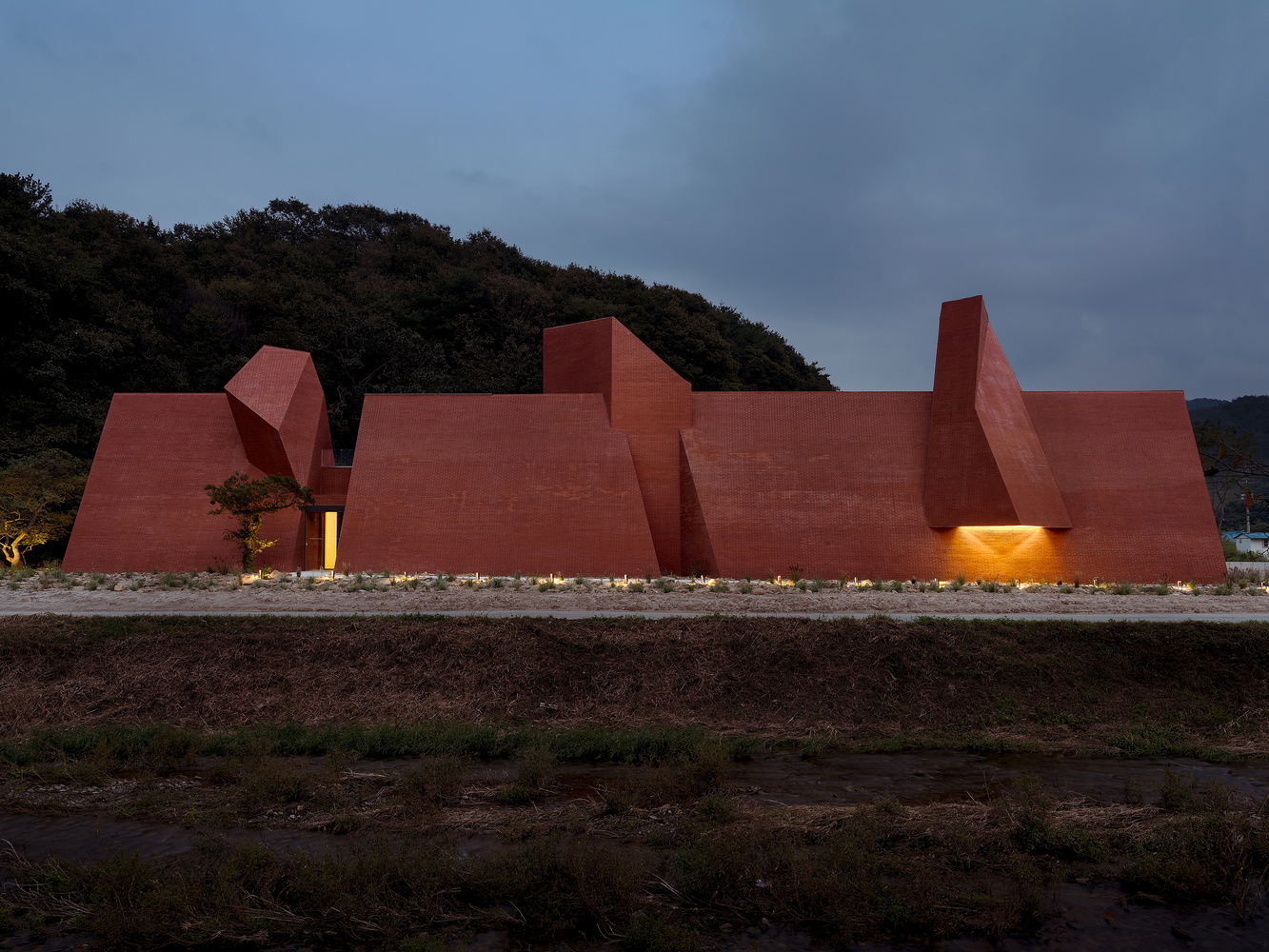
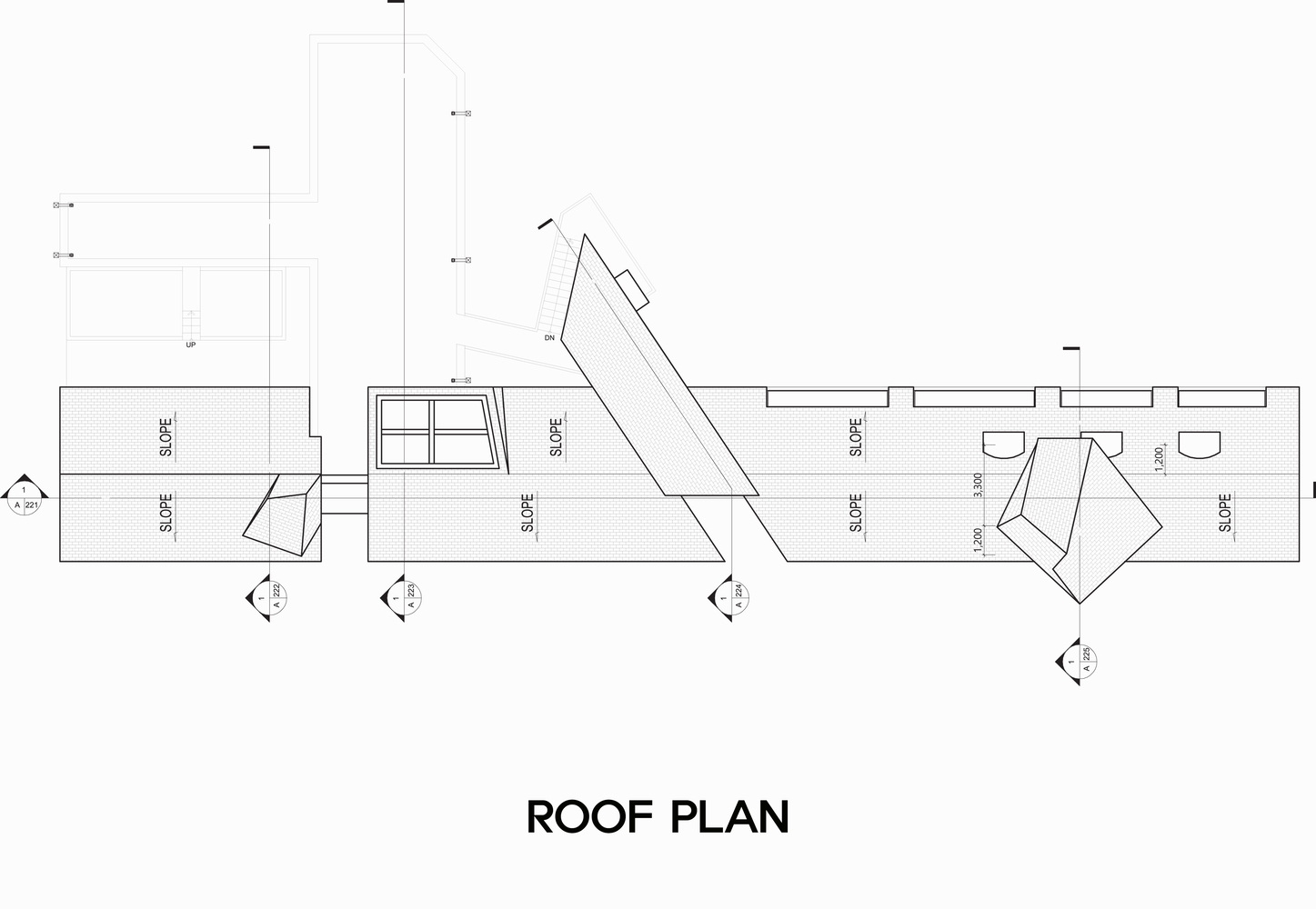
주요 건축적 모티프는 드라마 『왕좌의 게임』에 등장하는 북쪽의 ‘장벽’에서 영감을 받았다. 서사 속에서 이 장벽은 문명 간의 경계이자 시간의 단절을 상징한다. 본 프로젝트에서는 이러한 이미지를 시간 속에 축적된 기억을 담아내는 층위적 건축 매스로 재해석하였다. 접힌 벽돌 면과 날카롭게 정의된 볼륨은 이러한 기억의 층위를 드러내며, 건물에 강한 조형성을 부여한다.
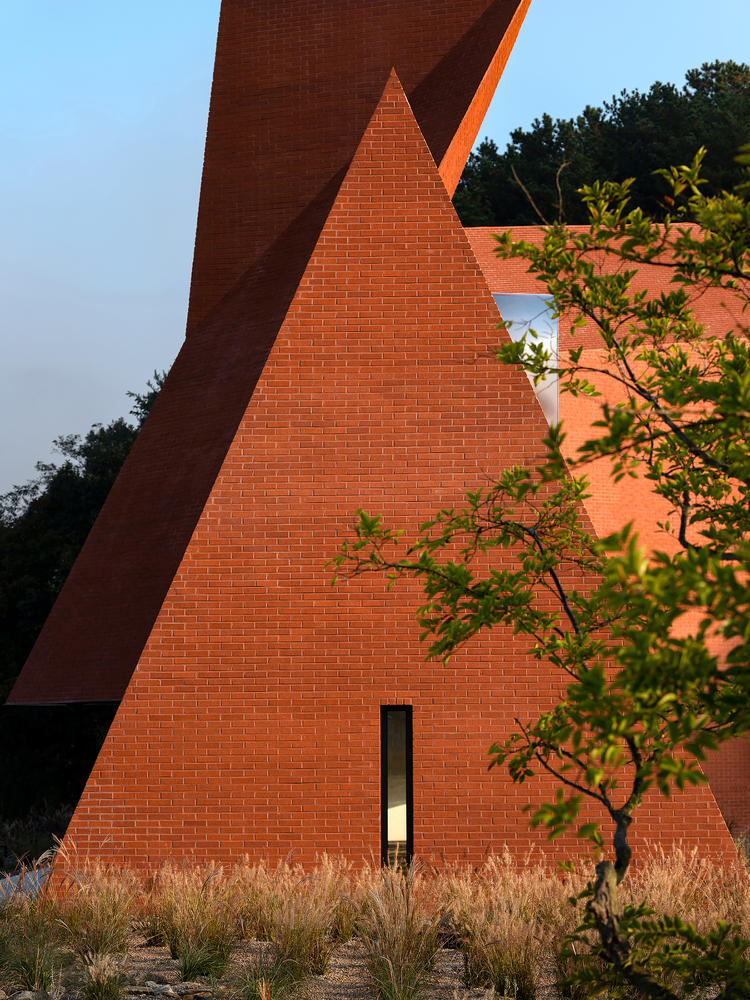
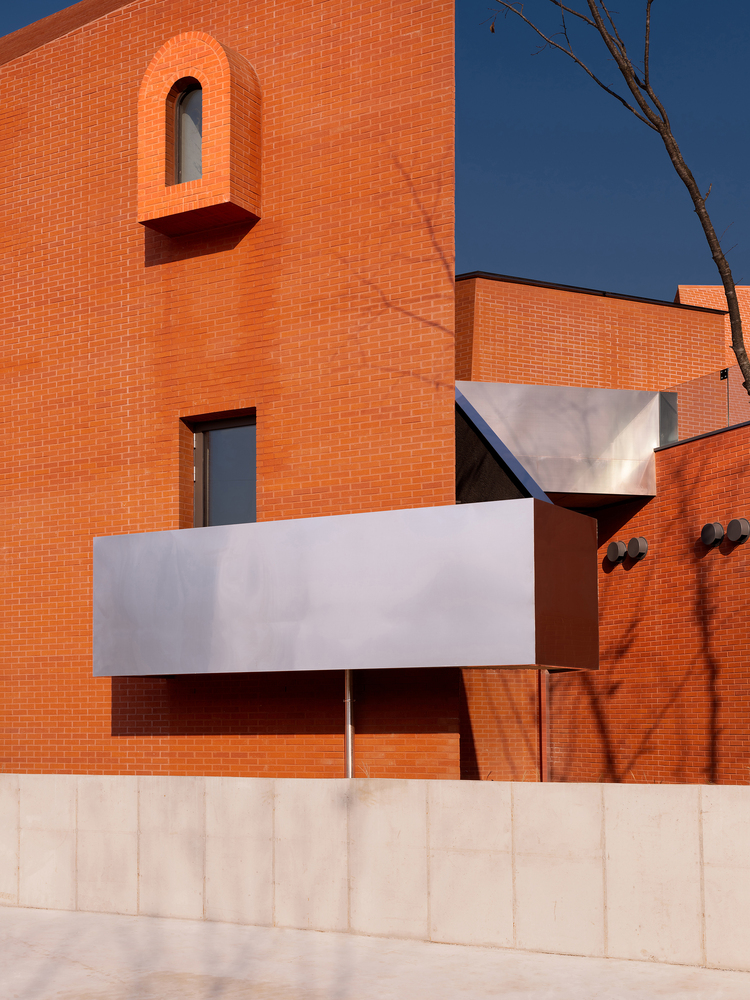
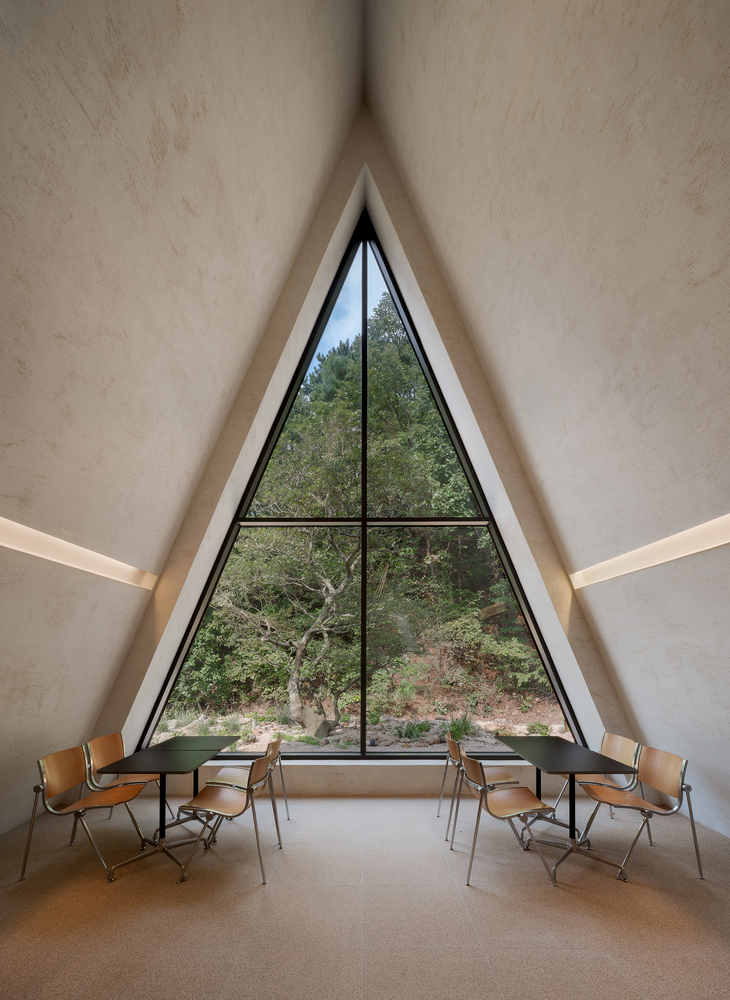
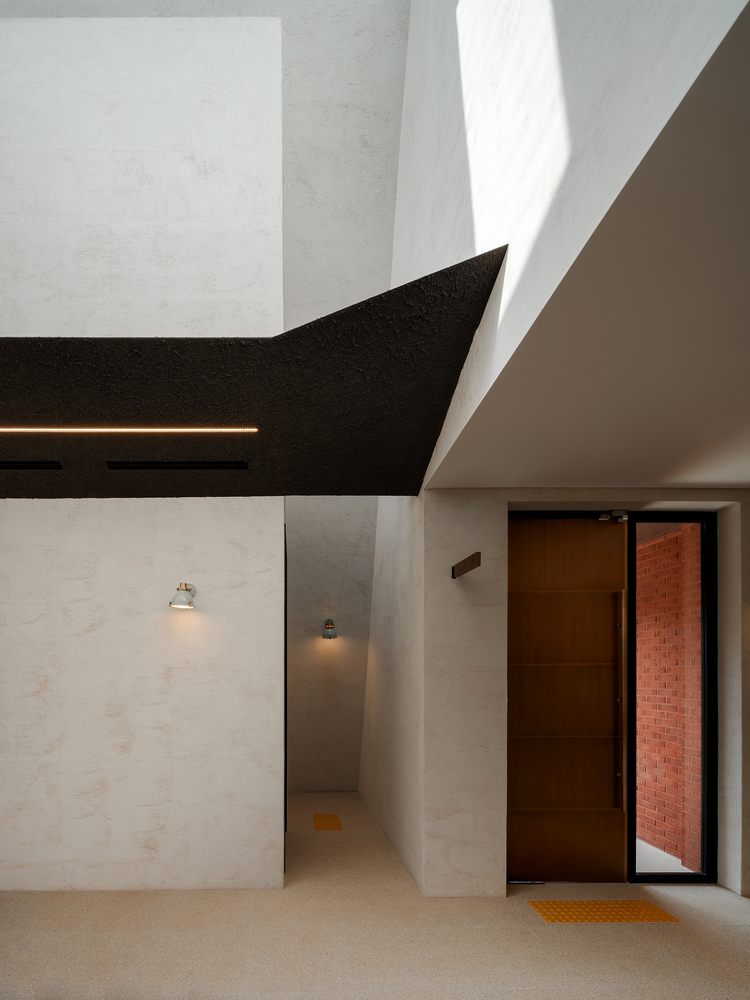
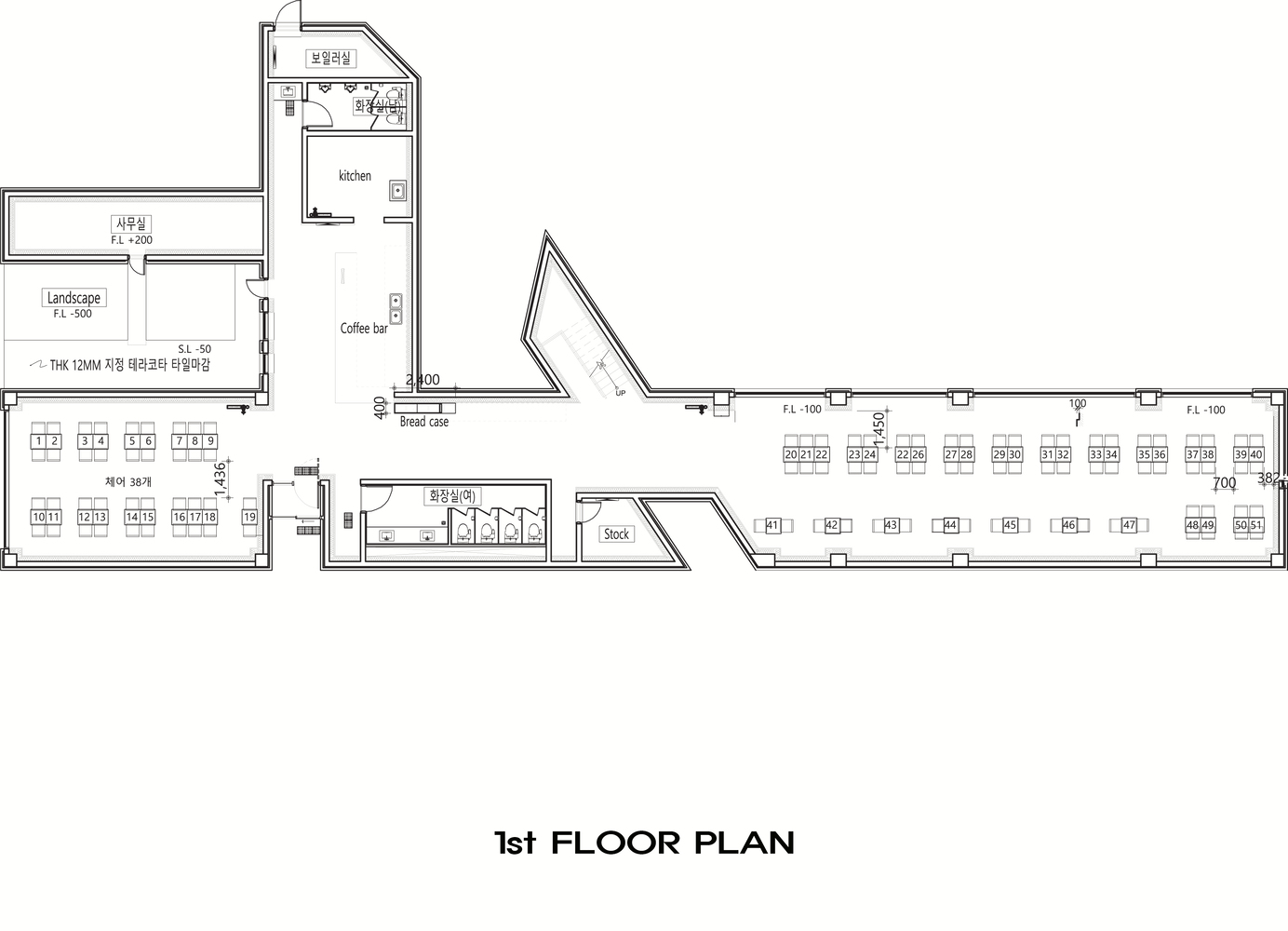
공간의 분위기는 수도원 건축이 지닌 절제된 성격에서 영향을 받았다. 장식적 요소나 과도한 상업적 표현 대신, 재료의 촉각적 질감, 건축 매스의 무게감과 견고함, 그리고 자연광의 흐름을 강조하였다. 큰 삼각형 개구부는 주변 풍경을 프레이밍하며 자연을 내부로 끌어들이고, 건축과 자연이 서로를 비추는 순간을 만들어낸다.
Monologue는 단순한 카페를 넘어, 건축, 인테리어, 브랜딩, 조형 작업, 회화가 하나의 서사 안에서 공존하는 문화적 공간으로 기획되었다. 이러한 요소들은 건축가이자 예술가인 정기태의 작업을 통해 통합되며, 공간 전반에 걸쳐 일관된 톤과 예술적 비전을 형성한다.
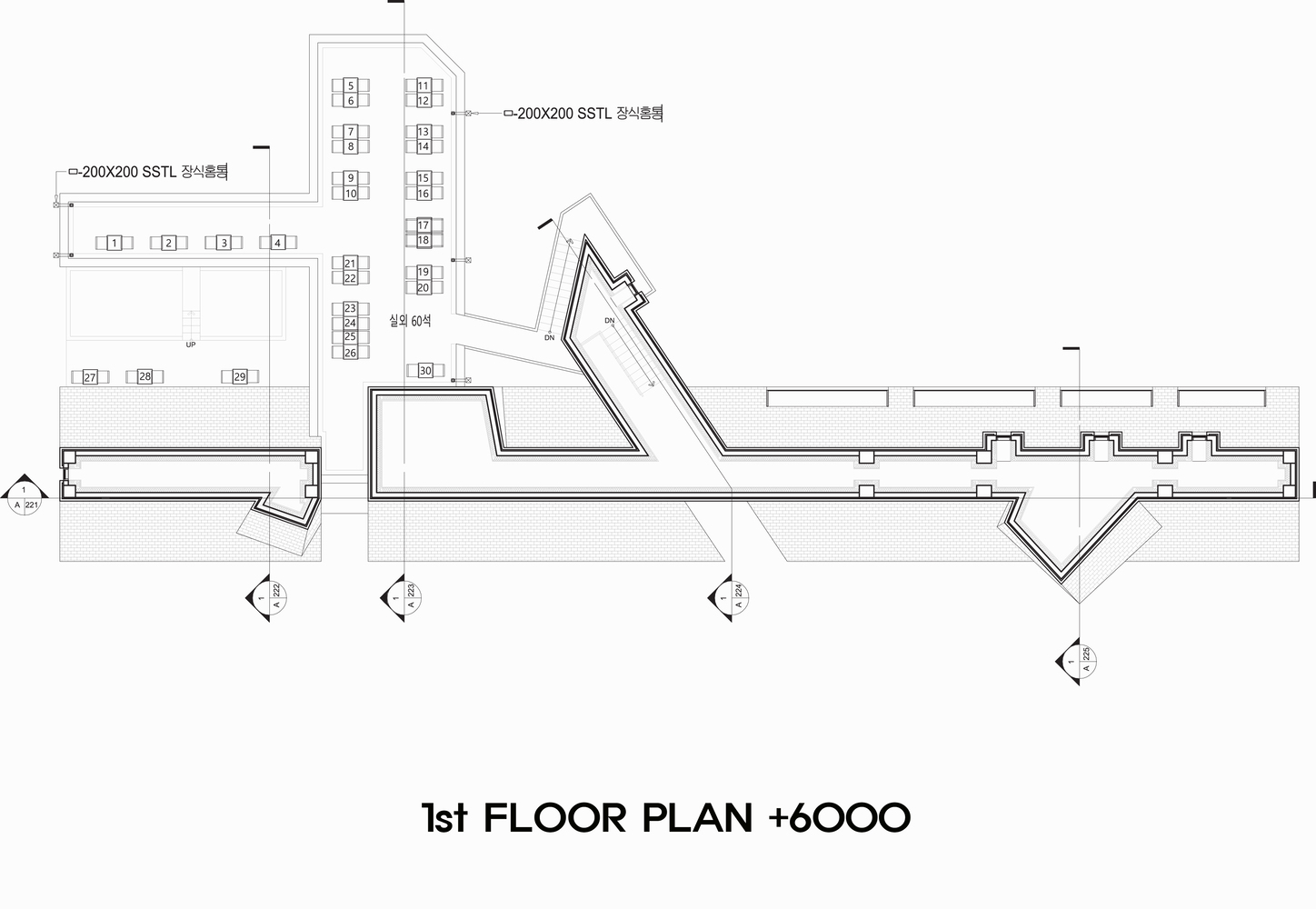
이 프로젝트는 단순히 음료를 소비하는 장소에 머무르지 않고, 건축과 예술, 서사, 시간이 교차하는 환경을 조성하고자 한다. 방문자는 공간에 머물며 이동하는 과정 속에서 건축을 천천히 ‘읽어가게’ 된다. 이러한 경험을 통해 Monologue는 사유와 멈춤의 장소로 기능하며, 일상 속에 깊이 있는 공간적 경험을 제공한다.
Monologue – A Walker in Time's Soliloquy originates from a speculative narrative imagining that the Earth has undergone a reset. The project begins with a simple question: if an ancient civilization once existed before this reset, and a monastery had been built within that forgotten world, what architectural form might it have taken?
The site is located in a natural landscape surrounded by forests in Hongcheon, Gangwon-do, South Korea. Rather than appearing as an isolated object, the building was conceived as a sculptural presence embedded within the landscape and the passage of time. The architecture intentionally avoids a singular frontal perspective and instead reveals different forms depending on the viewer's position and movement around the building.
The primary architectural motif was inspired by the northern Wall depicted in the television series "Game of Thrones." In the narrative, the Wall functions as a boundary between civilizations and a symbolic rupture in time. In this project, that image is reinterpreted as a layered architectural mass that evokes accumulated memories embedded within time. Folded brick planes and sharply defined volumes express this idea of stratified memory and give the building a strong sculptural presence.
The spatial atmosphere draws inspiration from the restrained character of monastic architecture. Instead of relying on decorative gestures or overt commercial expression, the design emphasizes the tactile quality of materials, the weight and solidity of the architectural mass, and the movement of natural light. Large triangular openings frame the surrounding landscape, allowing nature to enter the interior space and creating moments where architecture and nature reflect one another.
Monologue was conceived not simply as a café but as a cultural environment where architecture, interior design, branding, sculptural work, and painting coexist within a single narrative framework. These elements are integrated through the work of architect and artist Gi-tae Chung, creating a unified tone and artistic vision throughout the space.
Rather than functioning solely as a place for the consumption of beverages, the project seeks to create an environment where architecture, art, narrative, and time intersect. Visitors are invited to dwell within the space and gradually "read" the architecture as they move through it. In this way, Monologue becomes a place of reflection and pause, offering a spatial experience that enriches everyday life through contemplation and sensory engagement.
Monologue Café
GANGWON-DO, SOUTH KOREA
Architects : SOSOKKI ANAC
Area : 455 ㎡
Year : 2025
Photographs : Hong Seokgyu







from archdaily
(archdaily 의 글과 사진을 사용하여 작성하였습니다.)